Sealcoating
Asphalt sealcoating for driveways and parking lots
A properly applied sealcoat protects asphalt from the things that break it down and gives the surface a clean, uniform finish that makes the whole property look maintained.
What sealcoating is — and what it isn't
Sealcoating is a protective coating applied over existing asphalt. It forms a barrier between the pavement and water, ultraviolet light, oil, gasoline and de-icing salts, all of which degrade the asphalt binder that holds the surface together.
It is maintenance, not repair. Sealcoating protects pavement that is still structurally sound; it does not fix failed base layers, deep alligator cracking or potholes. When we look at your surface we will tell you honestly whether sealcoating is the right next step, whether repairs should come first, or whether you should simply wait.
On most jobs, crack sealing is completed before sealcoating so the surface is sealed as a whole rather than coated over open cracks.
What you get
- A barrier against water intrusion, UV oxidation and vehicle fluids
- A deep, uniform black surface that immediately improves curb appeal
- A smoother surface that is easier to sweep, plow and keep clean
- Sharper contrast for any line striping applied afterward
- A maintenance step that is far less expensive than resurfacing
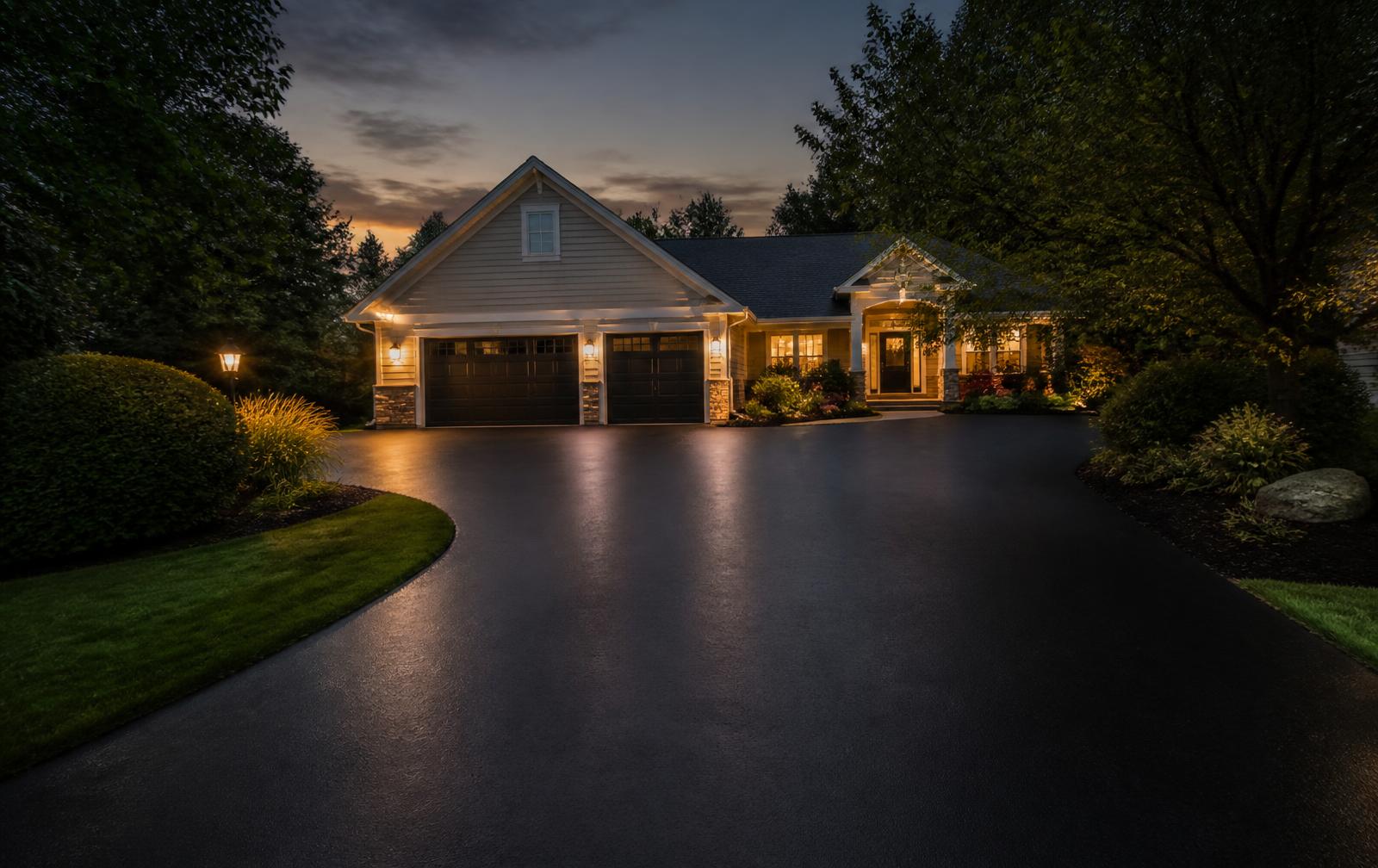
Before & after
Asphalt sealcoating for driveways and parking lots results
Real results from our crews — the same surface before and after the work.
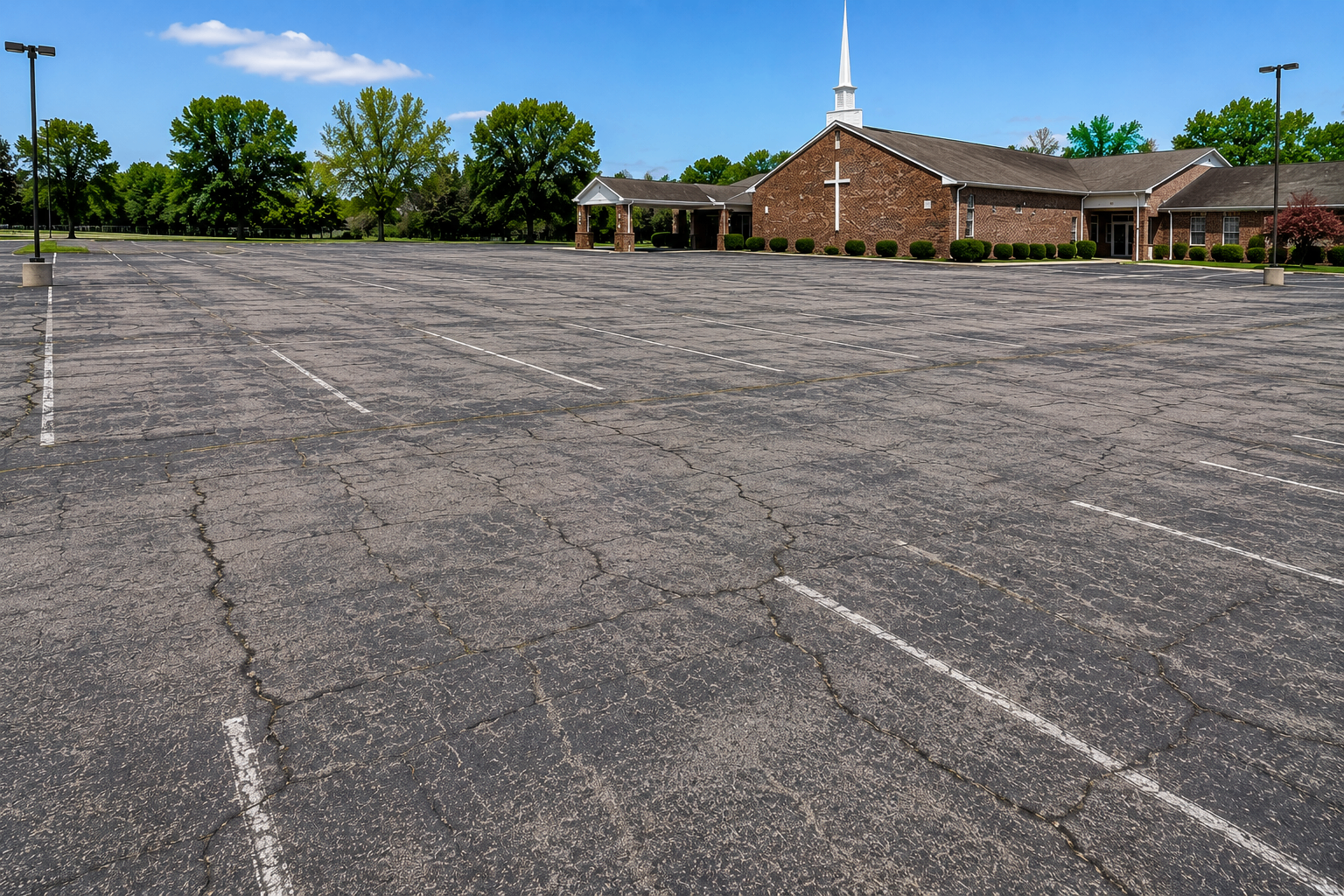
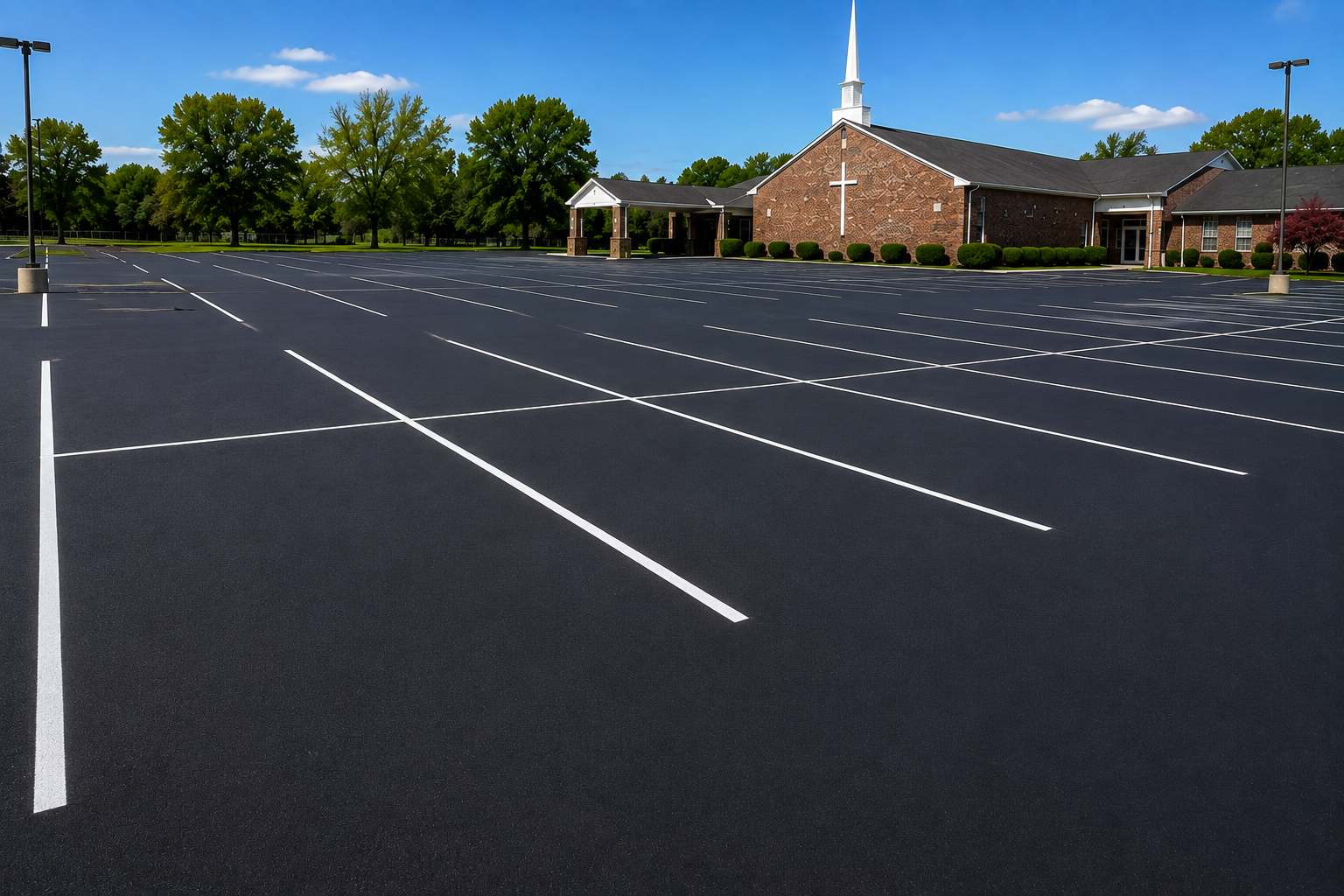
Commercial church lot sealcoating — before and after
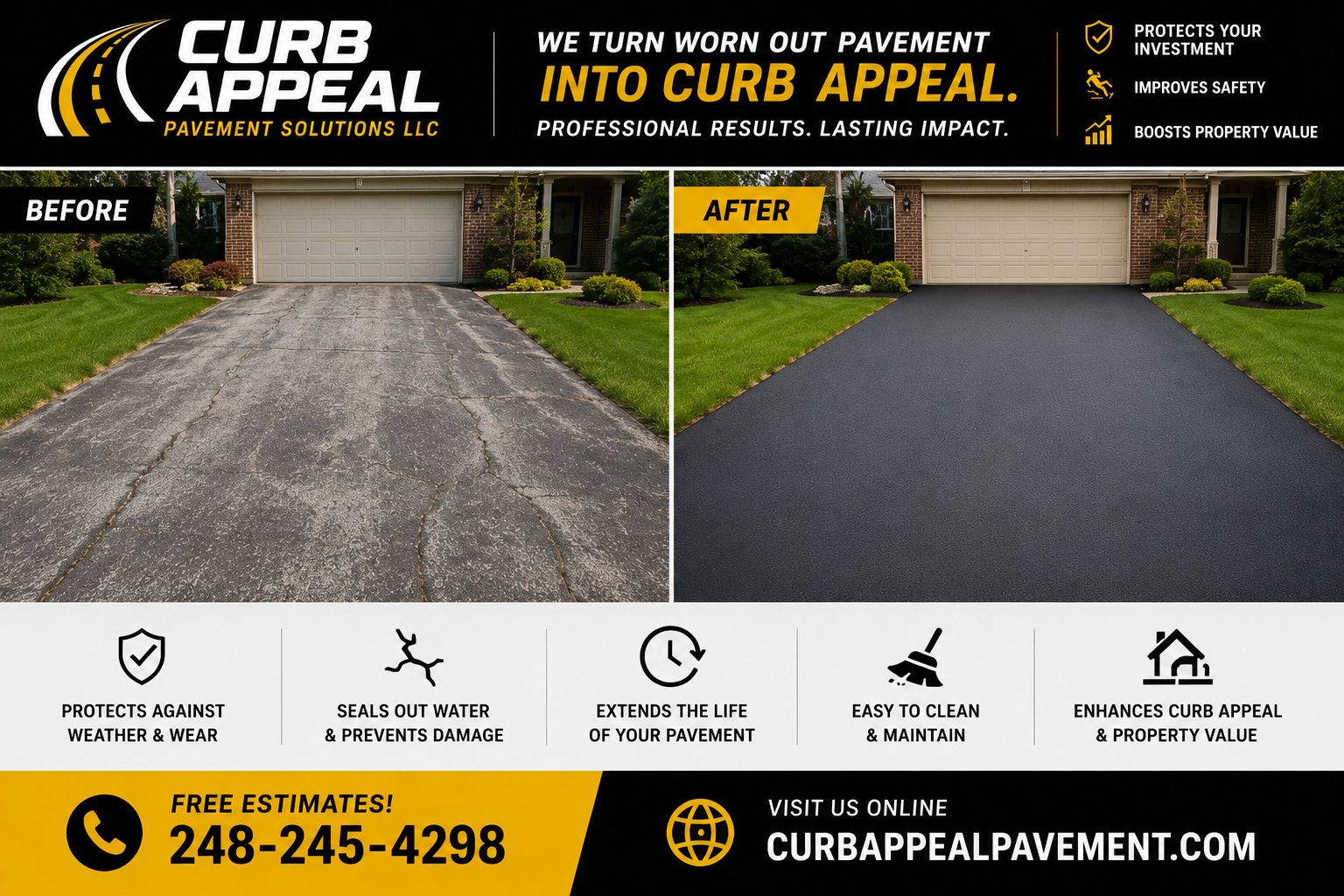
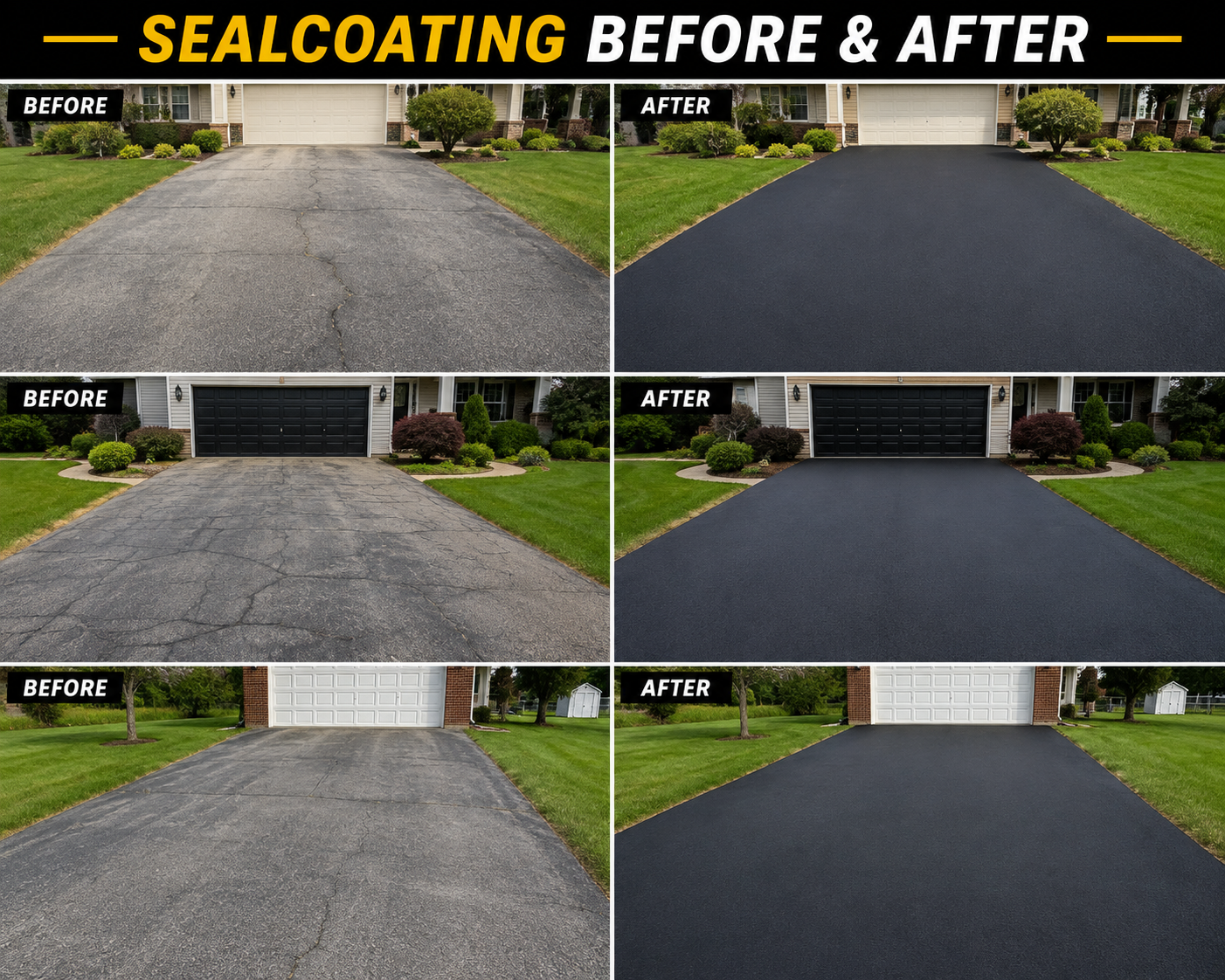
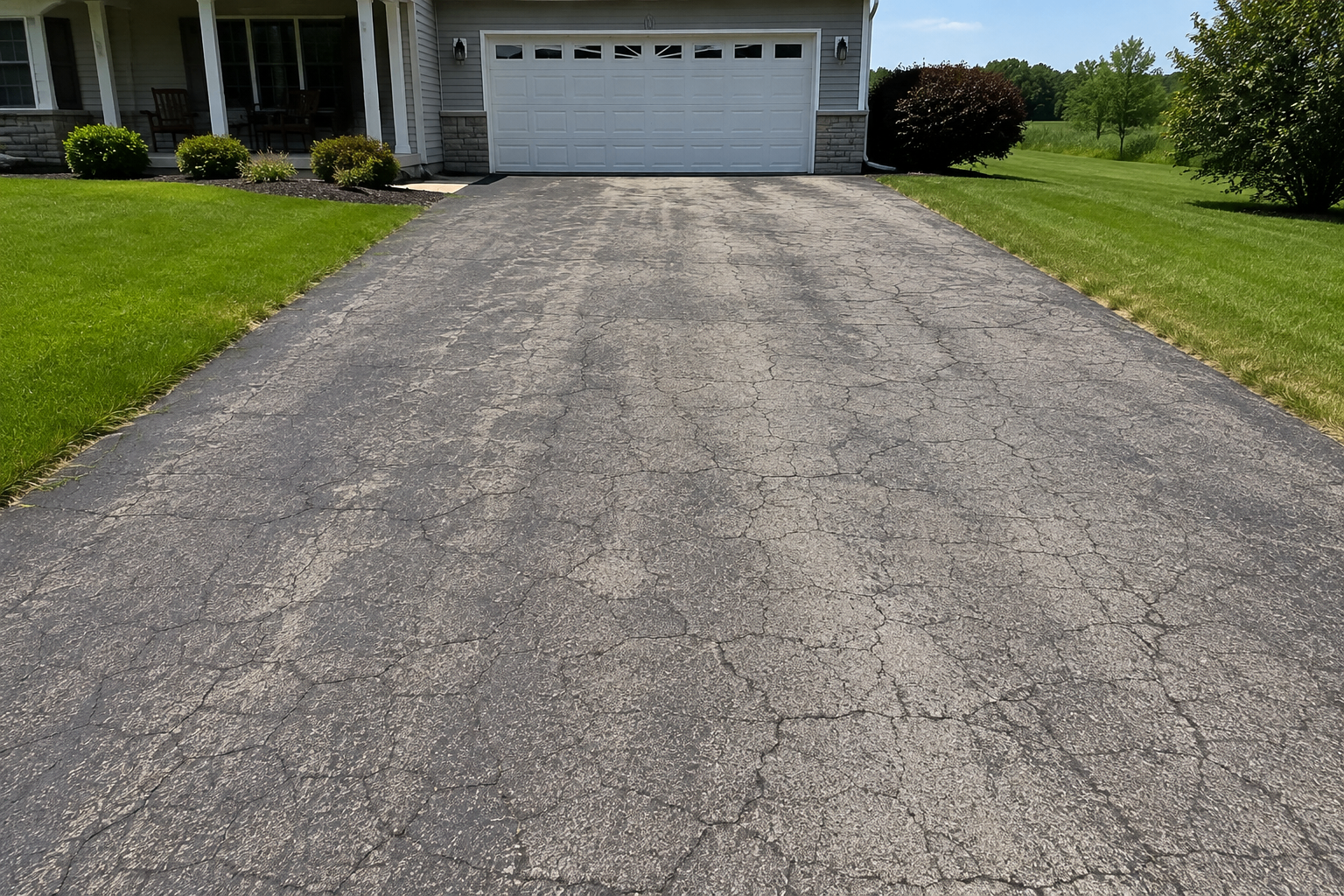
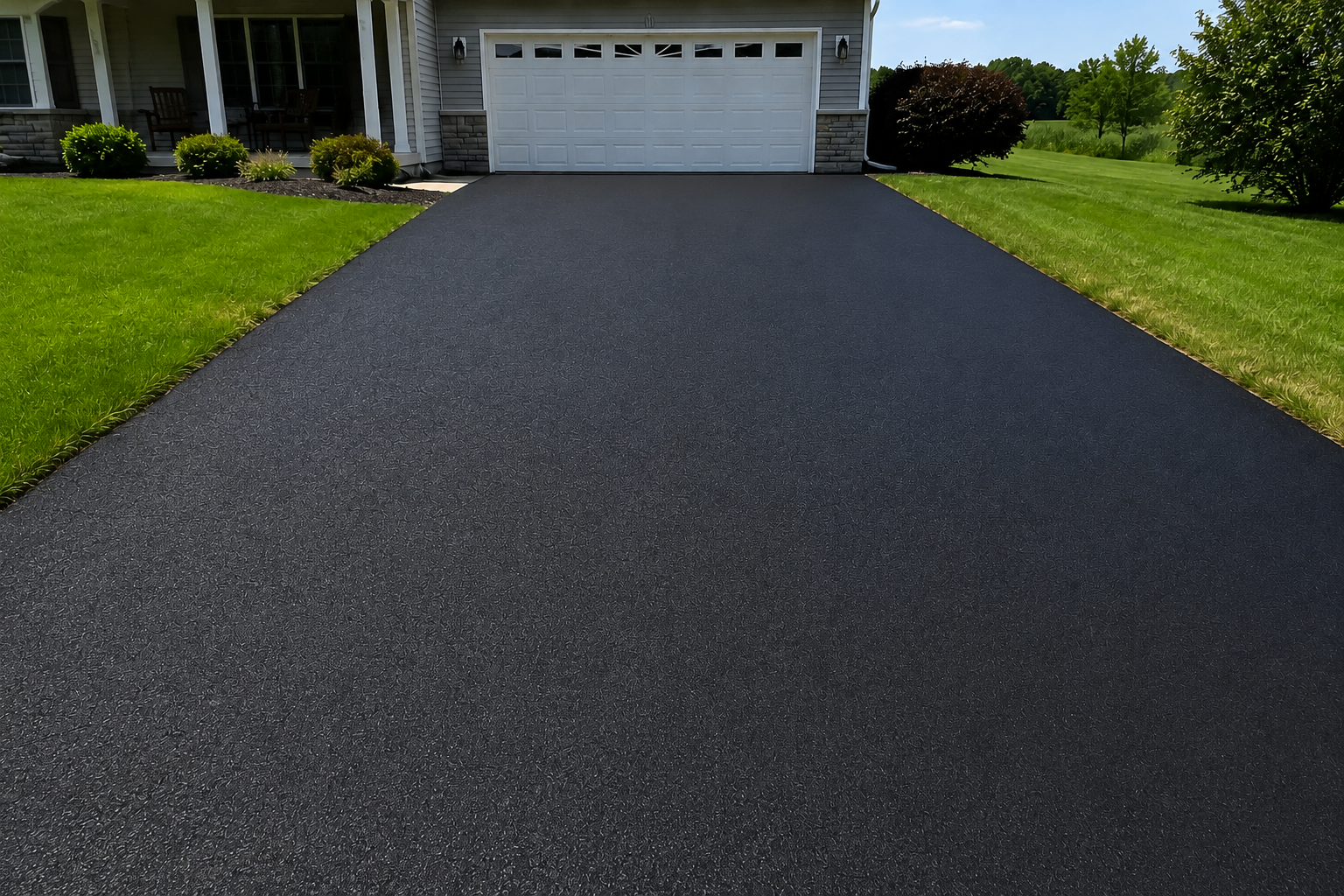
Single driveway transformation — cracked and faded to freshly sealed
How it works
Our sealcoating process
- 01
Assessment
We look at surface condition, drainage and cracking, then tell you whether sealcoating makes sense now.
- 02
Preparation
Surface cleaning, edge trimming where needed, oil-spot treatment and crack sealing before any coating goes down.
- 03
Application
Careful cut-in around edges and structures, then even application across the surface in suitable weather.
- 04
Cure and handoff
We mark the area, give you a specific cure timeframe, and walk the finished work with you when it is ready.
Weather and scheduling
Sealcoating requires warm, dry conditions and adequate cure time, so the Michigan season runs roughly from late spring into early fall. If the forecast turns, we reschedule rather than apply product in conditions that would compromise the result.
Ready for a straight answer on your pavement?
Send a few details and we will follow up with a clear, honest scope and price. No pressure, no upsell games.